My Journey to Going Electric
- Reading time: 5 Min
I never thought I’d be writing a blog post about loving my car, especially considering I didn’t even pass my driving test until I was 42. For years, driving was just something I tolerated. That all changed when I went electric.
I love technology, and most electric cars feel like you’re flying a plane compared to traditional cars, so that really excited me. The two things that always put me off were charging and cost. Let’s be honest they aren’t cheap.
Why I Wanted to Change
I’d recently moved to a place that’s more out of town, which meant I was suddenly driving a lot more. My commute went from 2–3 miles to around 10 miles each way, so I wanted something easier and more comfortable to drive.
At the time, I was driving a little three-cylinder Kia Picanto. It was brilliant on fuel, but honestly, horrible to drive. It was massively underpowered, really struggled on faster roads, and had a pretty awful gearbox. It was also very basic — no sat nav, very little tech and everything felt like a struggle.
My Decision to Go Electric
I’ll admit there were a few things that worried me about going electric, and the biggest one was charging.
I’d read loads about EV owners charging at home, enjoying the convenience and paying around £5 for a full charge. That sounded fantastic.
The problem? I can’t have a home charger.
I live in a home where the electricity supply isn’t powerful enough to support a proper wall charger. While the car comes with a “granny charger” that plugs into a standard socket, it only charges at around 2–3kW, compared to 7–22kW from a dedicated charger. That means a full charge could take 35–40 hours instead of just a few hours overnight.
That said, it’s not really an issue if you’re just topping up overnight.
Public Charging to the Rescue
Thankfully, I’m lucky enough to have quite a few public chargers near me, although they’re not cheap.
I mostly use the charger at my local Lidl, which costs around 60p per kWh, compared to the 7.5p some energy companies charge at home. The higher cost comes down to a few things: lack of real competition (unlike petrol stations), companies that only exist to provide charging, and VAT. Public charging is charged at 20% VAT, compared to 5% at home.
There are rumours that the government may reduce VAT on public charging to encourage EV adoption, which would be very welcome.
I usually let the battery drop to around 20% and charge up to 80%. That takes about an hour and costs me roughly £23, a hell of a lot less than the £40 it used to cost to fill my petrol car. Overall, it works out much cheaper for me.
Changing My “Filling Up” Habits
I’ve also completely changed how I think about charging.
With petrol, I’d fill up when I was getting low. If I saw 30 miles remaining, I’d head to a petrol station. With my EV, I charge when I’m near a charger. When I go shopping, I charge. When I nip out for a brew, I charge.
Honestly? I find it more enjoyable than going to a petrol station.
The Cost
The cost always put me off EVs. Online, you see electric cars for £40–50k, which was way out of my budget — but that’s for brand-new cars.
There are some fantastic second-hand EVs out there, and because electric cars have fewer moving parts and are mechanically simpler, they’re generally cheaper to maintain and less prone to costly repairs.
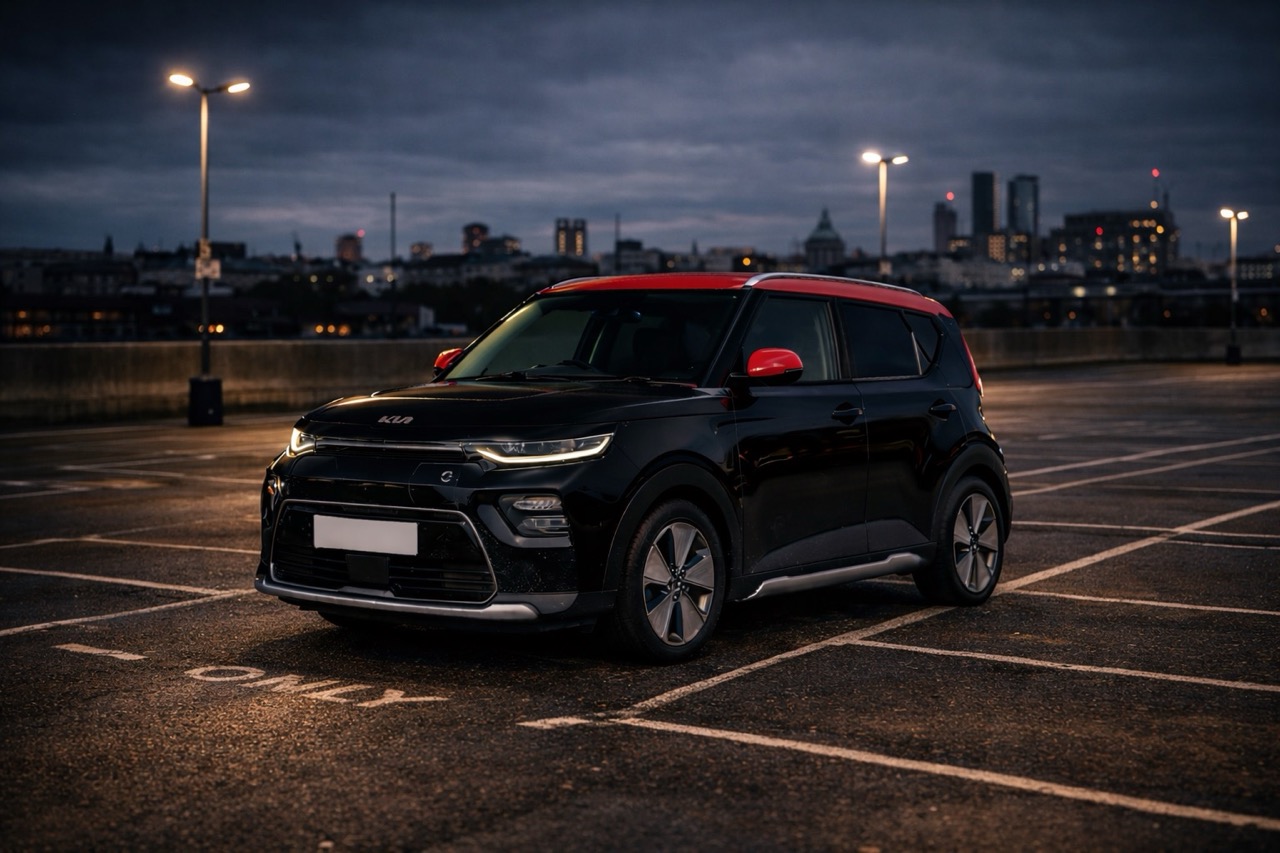
I decided to take the plunge and bought a three-year-old Kia Soul.
I’ve always driven Kias (apart from the Audi I learned in). I drove my dad’s Rio before he passed, and they’ve always been brilliant cars.
I also love quirky things, and let’s be honest, the Soul is a weird-looking bugger, which I love. It stands out, and I’d be bored to death in a white Range Rover.
It’s also the top-spec model, so it comes with loads of creature comforts: heated seats, a heated steering wheel, and a proper sat nav. There’s even an app that lets me monitor the car and control things like the heating.
I can’t tell you how good it is to have heated seats on a cold winter’s morning — or to set the car to defrost itself while I’m still in bed.
I paid just over £20k, which I think is an absolute bargain for what I’ve got. I don’t worry too much about depreciation once it’s paid off, whatever’s left goes towards the next car.
I Actually Enjoy Driving Now
Driving has always been a chore for me, just a way to get from A to B.
I’ve had dodgy knees for a while, so I really don’t miss using a clutch, changing gears, hill starts, stalling, or balancing the pedals when reversing. In my EV, I just put it in Drive and go.
It’s so easy. I can focus on the road and actually enjoy the journey. I’ve driven far more since switching to electric, and it’s also a bit of a pocket rocket. I feel more confident knowing it’ll go when I need it to.
Am I Converted?
Absolutely.
I can’t imagine going back. No more smelly petrol stations, messy engines, or expensive services.
I’m even looking at electric vans to convert into a campervan.
For me, the future is electric ⚡
0 Comments
Leave a comment